In the England documentary, Tuchel said that he may have switched to a defensive style too early in the World Cup semi-final, but he still takes responsibility for the substitution decision.
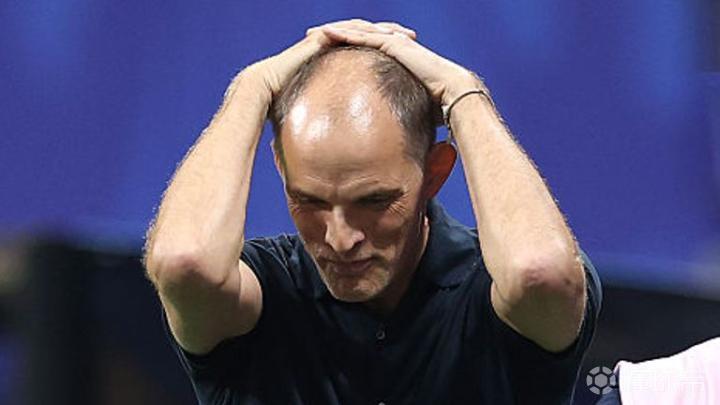
England were leading 1-0, just five minutes into stoppage time away from reaching their first World Cup final since 1966. After Tuchel switched to a five-man defense midway through the second half, goals from Enzo Fernandez and Lautaro Martinez changed the course of the game.
Tuchel had previously made controversial remarks about the DNA of English football after the semi-final defeat. He stated that England's increasing physical exertion during the tournament, coupled with Argentina's constant and drastic tactical adjustments, forced him to change his formation.
Tuchel said: "You can criticize me to death here, but this is my scar, not yours. I have to bear all of this, and you are not the ones who need to face it. I am in charge of this team, and these decisions are mine."
“No one is more hurt than me, and no one wants to win more than me. You can torture me endlessly, thinking that if I made a different substitution, we would have won the game. But you have no idea what the outcome will be.”
England had just taken the lead through Anthony Gordon, and Rice and Harry Kane had chances to extend their lead. During an Argentine counter-attack, Giuliano Simeone had a one-on-one opportunity, but Spence made a last-minute tackle to defuse the danger.
Tuchel said: "We played quite well in the first half, and the two sides were evenly matched. We had some good periods of possession. I was actually quite satisfied at that time, and I felt that the team was gradually getting into the game."
“From the second half onwards, I felt the team was under pressure. Argentina played more relaxed, their players moved more freely, and they found better ways to play. We created another chance quickly after scoring, then regained possession and created several threats, but lost possession in another attack, which forced Spence to make that tackle.”
"This incident affected me, and it may have affected the players as well. Our mentality suddenly became 'let's just get through this first.' We played like there were only 4 minutes left in the game, instead of 30 minutes."
“We haven’t done enough in all aspects, from execution details, backfield organization, playing around Messi, to attacking one side first and then moving to the other, bringing the game into the opponent’s half, putting pressure on the opponent, and gaining physical and mental recovery time through possession.”
Pickford made a crucial save from Nicolas Gonzalez's shot just before the final water break. Tuchel then substituted Konsa for goal scorer Gordon, switching England to a five-man defense.
Tuchel said: "Argentina then played very fast. Sorry to say that, but they played 'whatever football': we had nothing to lose, so we went all out."
"They fielded four forwards, two wingers, two strikers, and Messi all up front. They substituted a number 6 player for a number 10 player; then they substituted a center-back for a number 6 player. Sometimes they even played a 3-1-6 formation, which made things very difficult for us."
"Looking back, that huge chance before the water break affected my judgment. I thought, we can't hold on. It's like waiting to die. We weren't in possession, and our defense wasn't good in a 4-4-2 formation. We needed help."
"I want to give the players a clear plan: let's play like this now."
"With this mindset and experience, we eventually switched to a five-defender formation against Norway and Mexico, and both times it was successful. I think Argentina relies heavily on crosses, and they have four forwards in the last line, so I wanted to use a five-defender formation to counter them."
“I changed to 5-3-2 and adjusted the formation because I believed it would better deal with the width of the flanks. If the opponent continued to cross, there would still be 3 center-backs in the middle. Later we changed to 5-4-1. My mentality was probably 'let's just get through this first,' but that mentality came too early.”
Shortly after the water break, McAllister's shot hit the post, and England continued to be under pressure as Argentina subsequently scored two goals.
Tuchel believes that England's performance against Argentina was affected by factors such as winning the game against the Democratic Republic of Congo after trailing for a long time, playing with 10 men in the high-altitude environment of the Aztec Stadium, and defeating Norway in extra time in the heat of Miami.
Tuchel said: "These effects accumulated throughout the tournament. Against the Democratic Republic of Congo, we were down 0-1 for 70 minutes; against Mexico, we played at high altitude; and then we flew to Miami to play Norway. We were exhausted, but we persevered until the 88th minute."
When asked if he could bring on more attacking players, Tuchel said, "Of course. Nobody knows what will happen. We might choose to make attacking substitutions, lose 2-1, and then someone will say, 'Is he crazy? He finished with a five-man defense against Norway, why didn't he continue with a five-man defense this time?'"
"Based on what I've seen, my accumulated experience, and the extent to which Argentina makes crazy adjustments, that's my solution. The coach intervenes in the game to provide help, not for personal gain. We just want to help the team."
“If we are more consistent in the game and have more possession, I won’t change the formation. Why would I change it? I would choose to make attacking substitutions. But that’s a very difficult path, and it could be very agonizing for me.”